DNS Checker Philippines: Free DNS Lookup Tool


 May 7, 2026 6:51 am
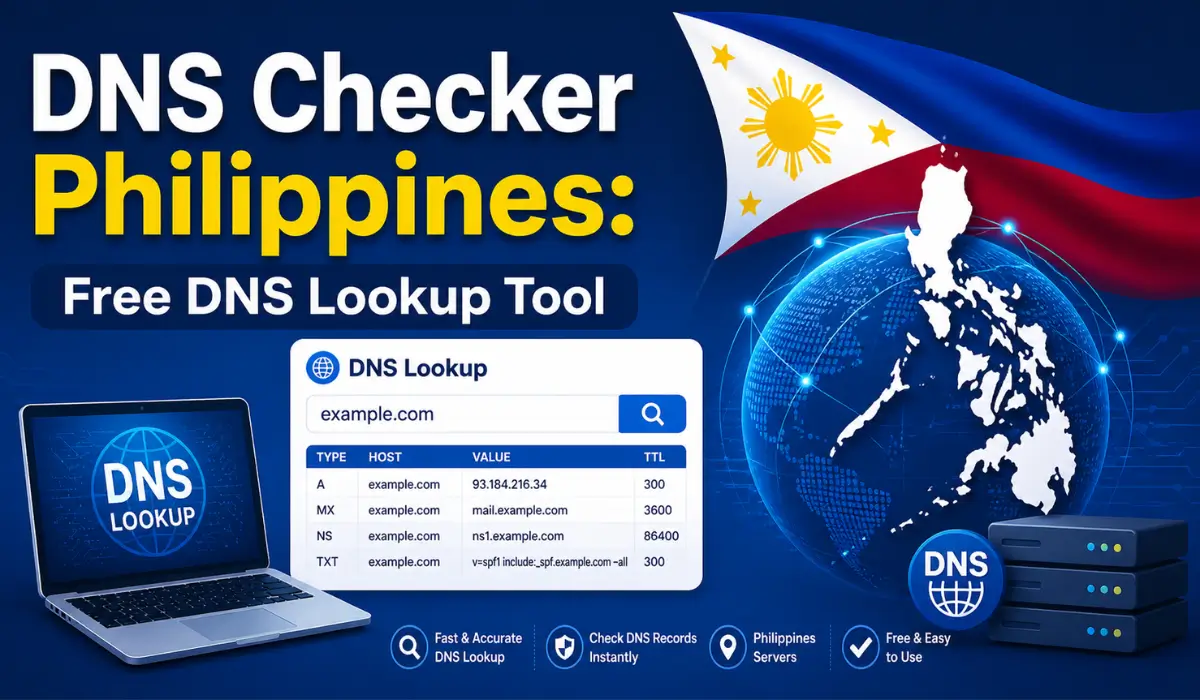
Ever opened a website and it just wouldn’t load even though everything on your end seemed fine? Or maybe you updated your domain settings and now you’re not sure if the changes actually went live? If you’re managing a website or network in the Philippines, these moments can be genuinely stressful. That’s where a DNS Checker becomes your best friend.
This tool is built for exactly that it takes a domain name and pulls the real, current DNS record data straight from authoritative servers.
The Domain Name System handles that name-to-address conversion behind the scenes, turning something human-readable into a machine-readable IP address like 216.168.246.55 every time someone types a URL into their browser. Whether you’re a developer, a business owner, or just someone trying to figure out why their site isn’t working, the DNS Checker gives you accurate, up-to-date info without the guesswork.
DNS Checker
Check DNS records of any domain instantly — free for Philippines users
Primary Features of the DNS Lookup Tool
Not all DNS tools are built the same. A good DNS Lookup Tool needs to be fast, reliable, and actually show you everything you need not just half the picture. Here’s what makes this one stand out:
| Feature | What It Does |
|---|---|
| Speed and Accuracy | Live DNS lookups with minimized delay real-time data, not stale cache |
| Comprehensive Record Support | Query A, AAAA, MX, TXT, CNAME, and more DNS record types in one go |
| User-Friendly Interface | Built for both tech professionals and beginners to run accurate lookups easily |
Whether you’re troubleshooting a mail routing issue or just verifying your domain setup, this tool covers it all without needing a technical background to use it, especially for users managing network systems like LPB Piso WiFi where proper configuration and connectivity checks are essential.
Disclaimer
This website is created for educational purposes only, and all content is originally written by Arif Khan nothing is copied from any source. We are not affiliated with any brand or company mentioned here. If you have any concerns, please contact us directly before taking any legal action.
What Types of DNS Records May Be Looked Up?
A single domain name can handle a lot at once hosting a website, managing email, running a VoIP service, and more. Each of these functions uses a different DNS record type. Here’s a clear breakdown of all the record types you can look up:
| Record Type | Full Name | What It Does |
|---|---|---|
| A Record | Address Record | Maps domain names to IPv4 DNS IP addresses |
| AAAA Record | IPv6 Address Record | Same as A Record but for IPv6 IP addresses |
| MX Record | Mail Exchange | Points to email servers handling mail for a domain name |
| NS Record | Nameserver Record | Shows the authoritative nameservers for a domain |
| CAA Record | Certificate Authority Authorization | Controls which certificate authorities can issue certificates for a domain |
| CNAME Record | Canonical Name / Alias Record | Points subdomains to other DNS records |
| SRV Record | Service Record | Stores protocol and port numbers for services like VoIP or chat server |
Understanding which record to query saves you a lot of time when something isn’t working the way it should, especially when troubleshooting network issues or setting up a strong WiFi password to improve security and stability.
How Does a DNS Lookup Work?
When you type a URL or send an email, your device doesn’t just magically find the right server. It goes through a chain of global DNS servers, each playing a specific role. Here’s how that process works step by step:
- Recursive Resolver: This is the first DNS server your computer or device contacts. It’s usually assigned by your service provider and is geographically close to you, which is why results come back fast.
- Root Name Server: The recursive resolver asks the root name server where to go next. For example.com, it returns the IP address of the .com TLD name server.
- TLD Name Server: The top-level TLD name server handles all domains under its extension. The .com TLD name server responds to example.com queries but not example.org.
- Authoritative Server: This is the final stop. It holds the actual DNS configuration for the domain name and returns the record your device was looking for.
This whole chain happens in milliseconds, which is why browsing feels instant even though a lot is going on in the background, and this is exactly why tools like a download speed & upload speed test help you understand how efficiently this process is performing in real time.
What is a Forward DNS Lookup?
Of the two types of DNS lookups, Forward DNS is the one that runs in the background every time you browse the web or send an email. When you input a URL or fire off a message, a standard DNS query kicks off and returns the IP address tied to that domain name or email address.
This is what allows your device to locate and communicate with the right server-side destination. Without a forward DNS lookup, your browser would have no way to translate a human-friendly domain into the machine-level address it needs to load a page or deliver a message. It’s the invisible handshake between what you type and where you actually end up.
What is DNS Lookup Used For?
DNS resolution is what keeps the internet usable for everyday people. Without it, you’d have to memorize a raw IP address just to visit a website. DNS lookup handles the translation of human-readable domain names into IP addresses while also retrieving the DNS records that keep website functionality running things like routing, email delivery, and authentication all depend on it.
What is the Process for Looking Up a DNS Name?
Using a DNS lookup tool whether it’s this one or something like Sendmarc the process is straightforward. You enter a domain name, and the tool queries the DNS servers associated with it. What comes back is a full view of that domain’s configuration:
- Which servers handle its email
- Which nameservers are authoritative for it
- Where its subdomains are pointing
- What IP address it resolves to
This makes it easy to spot misconfigurations or confirm that your recent changes have actually gone live, especially when performing an IP Check in Philippines to verify that your network settings and location updates are correctly reflected.
How Does DNS Lookup Work?
A DNS lookup doesn’t jump straight to an answer. It works through a structured path starting at root servers, moving through top-level domain TLD servers, and landing at the authoritative servers that hold the actual records. The result you get back includes both the IP address and the associated records that describe how the domain is set up and where its traffic should go.
What Kind of Records Can I Look Up With DNS?
A DNS lookup can return a wide range of record types:
| Record Type | Purpose |
|---|---|
| A | Maps domain to IPv4 address |
| AAAA | Maps domain to IPv6 address |
| MX | Handles email routing |
| TXT | Used for verification and authentication |
| CNAME | Alias pointing to another DNS record |
| NS | Lists authoritative nameservers |
| SOA | Start of Authority domain admin info |
| CAA | Controls certificate issuance |
| SRV | Defines protocol and port for services |
If something’s misconfigured on your domain, querying the right record type will surface it immediately, especially when diagnosing network access issues related to the 192.168.100.1 IP address.
Arif Khan 
Hi, I'm Arif Khan, a qualified Engineer with over 6 years of experience working with router and networking companies across the Philippines. I created 10001loginph.com to help everyday users navigate online platforms with ease and confidence. Alongside my engineering background, I'm also a passionate SEO Expert and Content Writer dedicated to delivering accurate, simple, and reliable digital guides. My goal is simple to make the internet easier for everyone, one guide at a time!